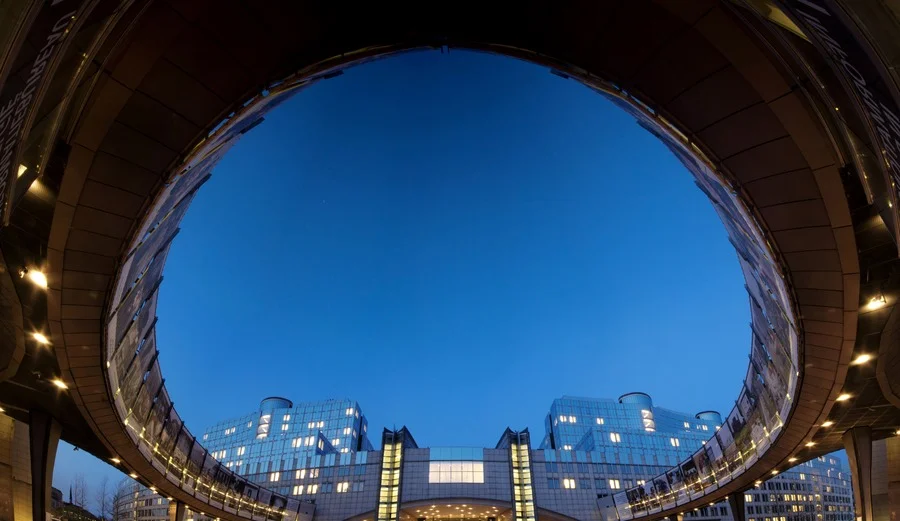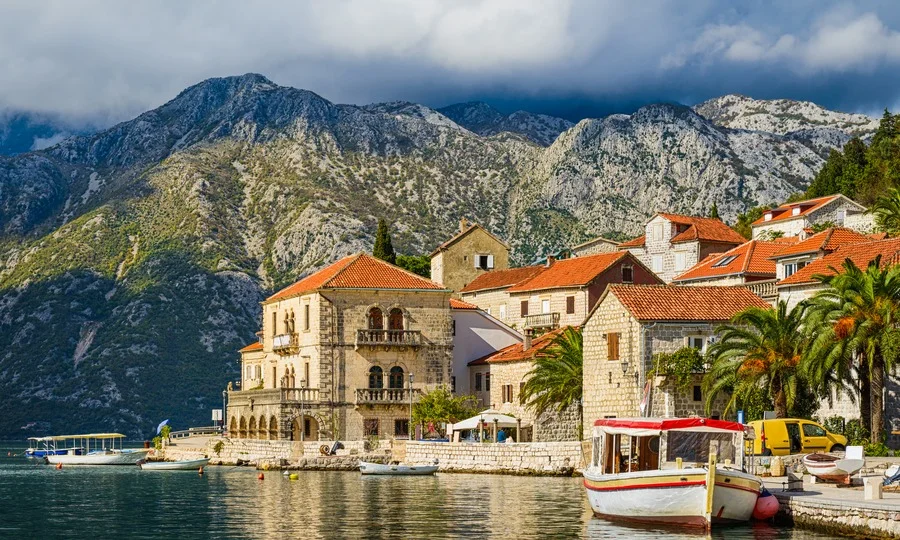
The long-awaited conclusion of Montenegro’s EU accession now represents a pivotal moment for the European Union. Unlike Iceland, which enjoys broad market access while maintaining political distance, Montenegro seeks full integration. This small Adriatic nation has committed 14 years to negotiations, opening all 33 chapters and provisionally closing 18.
Montenegro, with fewer than 650,000 people, is not significant in terms of population or GDP. However, its strategic position on the Adriatic is highly sensitive. It is a NATO member, borders the EU, and lies within the Western Balkans, a region where European, Russian, Chinese, and Turkish interests converge. Therefore, its political trajectory holds importance far beyond its economic size.
Indeed, Montenegro still faces significant reform challenges. Measurable progress is required in areas such as rule of law, judicial independence, corruption, public administration, and media freedom. The accession process must remain firmly based on demonstrable results. Lowering standards merely to claim a geopolitical success would ultimately harm both Montenegro and the EU.
However, conditionality works only if meeting benchmarks leads to a credible outcome. If conditions constantly shift, or if market access becomes a substitute for political membership, reform efforts lose their incentive. A country should not endlessly adopt rules without gaining a vote over those very rules. This arrangement, while tolerable for wealthy EEA states, is unstable for a candidate promised full membership.
Security concerns further highlight the cost of any delay. The European Parliament has praised Montenegro’s full alignment with EU foreign and security policy, including sanctions against Russia. Yet, the Parliament also warned of persistent foreign interference and disinformation campaigns designed to weaken the country’s pro-European and NATO orientation, specifically citing malign influence from Russia and Serbia.
Some might describe Montenegro as a potential ‘Trojan horse’ due to these pressures. This perspective, however, misinterprets the situation. External influence is not a reason to leave a compliant candidate exposed indefinitely. Instead, it underscores the need to complete integration once agreed conditions are met. Political uncertainty, moreover, fuels economic instability, deters investment, and provides an easy narrative for anti-European actors: Brussels will always find another reason to delay.
In a small, tourism-dependent economy, political instability rapidly impacts business decisions. Prolonged institutional disputes can delay public investment and weaken regulatory enforcement. Long-term capital, consequently, becomes more cautious. While EU membership would not erase all risks, a credible accession path would clarify the costs of reversing reforms and offer a stable reference point for investors, officials, and voters alike.
Brussels must also apply consistent standards. Montenegro has maintained alignment with sanctions despite domestic political costs. Meanwhile, Russia was still the EU’s second-largest supplier of liquefied natural gas in 2025, accounting for 13.9 percent of imports. This does not excuse Russian influence in Montenegro. It does, however, show why lectures on geopolitical reliability carry more weight when the Union acknowledges its own remaining dependencies.
So, what actions should Brussels take? First, keep reform requirements strict and transparent. Second, clearly state the next steps once these conditions are fulfilled. Third, treat access to EU programs and the single market as preparation for membership, not as a permanent holding pattern. Finally, judge Montenegro by both its domestic reforms and the strategic cost of leaving its accession process unresolved.
Ultimately, completing Montenegro’s EU accession would not resolve every dispute in the Western Balkans. It would, however, prove that the enlargement process can still reach a conclusion. Such evidence is now far more valuable than yet another declaration about enlargement being a geopolitical priority. If Montenegro completes its work and still finds the door closed, the message across the Western Balkans will be unmistakable: the process offers integration, but not necessarily full membership. This outcome would be a significant gift to every power benefiting from an unsettled region.