A significant U.S. foreign policy shift is reshaping Washington’s approach to multilateral cooperation. The Trump administration is withdrawing from 66 international organizations. It cites issues like waste and perceived loss of sovereignty.
Secretary of State Marco Rubio explained this dramatic change in January 2026. He stated the U.S. would no longer issue “blank checks” to international bureaucracies. This policy aims to protect U.S. sovereignty and taxpayer dollars.
Withdrawals follow reviews under Executive Order 14199. Affected bodies include UN Population Fund (UNFPA), UN Women, and the UN Climate Secretariat (UNFCCC). Rubio accused these institutions of mismanagement, politicized agendas, and inefficiency.
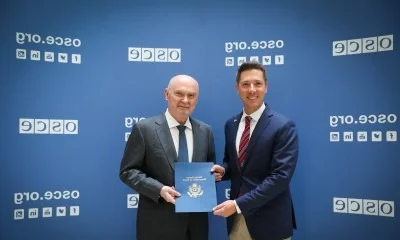
However, Washington maintains an active role in strategically important bodies like the Organization for Security and Cooperation in Europe (OSCE). U.S. Ambassador to the OSCE, Darrell Owens, highlighted its importance in Vienna. The OSCE remains a vital platform for direct negotiations, particularly concerning the Russia-Ukraine war.
The U.S. prioritizes conflict prevention, field operations, and the historic Helsinki security architecture within the OSCE. Moreover, it demands strict financial discipline. This includes timely budget decisions and rigorous cost control for upcoming fiscal years.
The OSCE faces a core challenge: its consensus principle requires agreement from all 57 member states. Russia has systematically used its veto power. This has paralyzed initiatives and blocked funding for democracy programs for years.
For example, the OSCE operated without a regular budget since 2021 due to Russian blockades. This move aimed to curtail programs like election observation. Despite these hurdles, the OSCE developed pragmatic survival mechanisms.
Member states use off-budget funding through voluntary contributions for crucial initiatives. In March 2026, a breakthrough occurred under Swiss chairmanship. They agreed on a reduced budget of approximately 123 million euros, a cut of over 10 percent. This eliminated around 100 positions, satisfying both U.S. budget demands and Moscow’s approval.
The OSCE increasingly focuses on technical, field-based missions, such as border security advisory services. It removes highly politicized issues from its main agenda. This strategy ensures operational continuity despite political tensions.
This organization’s “survival advantage” stems from its Cold War origins. The OSCE (formerly CSCE) was designed as a pragmatic dialogue channel between hostile blocs. European states, including Germany and France, heavily support its day-to-day work.
The Trump administration’s new approach signals a shift from “blank-check multilateralism” to “transactional bilateralism.” The OSCE’s budget cuts exemplify Washington’s message: reform or face withdrawal. The U.S. now uses multilateral forums selectively, like a toolbox, for immediate security or trade interests.
However, this preference for bilateral negotiations faces practical limitations. Counterparties like China and the EU can resist or find alternatives. The assumption that U.S. market dominance alone forces concessions often overlooks global interconnectedness.
A U.S. foreign policy shift towards purely bilateral dealings can alienate allies. For instance, unified pressure on China for intellectual property is more effective multilaterally. Attempting to renegotiate hundreds of agreements bilaterally can overwhelm even a large diplomatic apparatus.
Washington’s decision to remain in the OSCE indicates a partial recognition of bilateralism’s limitations in security policy. Complex global problems and powerful counterparts often necessitate broad, multilateral forums. European nations, meanwhile, are learning to lead and safeguard multilateral platforms more independently.
This signifies the end of traditional multilateralism, not complete isolationism. Organizations, in this new calculus, survive if they prioritize hard security interests, drastically cut costs, and offer flexible negotiation platforms among major powers. The OSCE effectively embodies this evolving principle.