Many Austrian language classes, designed for new immigrant students, will no longer be mandatory. This policy shift follows significant criticism and concerning data about student outcomes. Previously, these separate learning groups often led to academic setbacks for young newcomers.
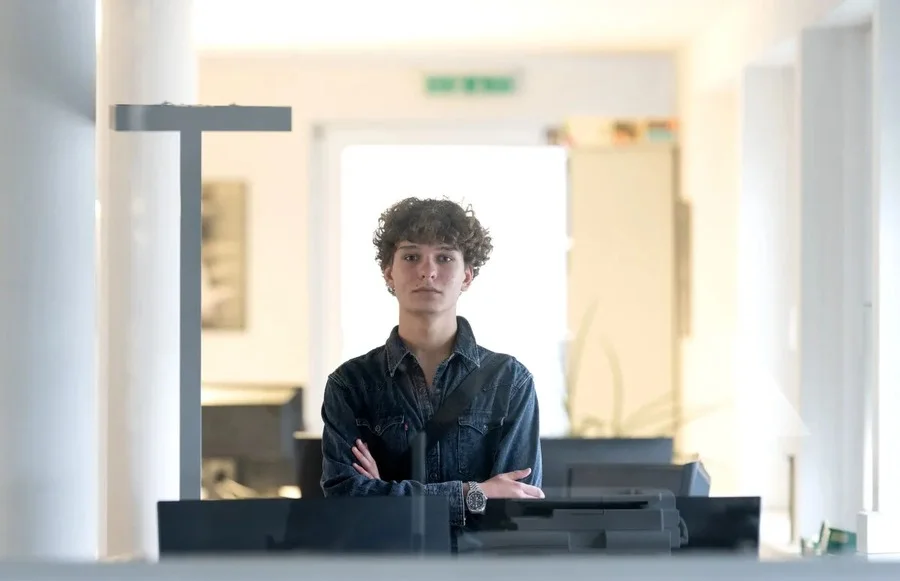
An evaluation showed that these separate classes caused a quarter of students to repeat at least one school year. This outcome contributes to a notably high number of over-age pupils within the Alpine EU member state. One 19-year-old refugee recounted feeling “lost” and “upset,” questioning why he alone had to leave his main class.
The program, initiated eight years ago under a conservative-far-right government, mandated daily German instruction for non-native speakers. Students were regularly pulled from their regular lessons for several hours. This approach contrasts sharply with many other European nations, where newly arrived pupils are typically immersed immediately into the mainstream system.
However, given the troubling assessment, the government has eased these stringent rules. Schools can now independently decide how to best support German language learners. As a result, approximately half of all schools have already abolished these separate Austrian language classes.
The legacy of the program remains evident, however. Austria records a comparatively high proportion of over-age pupils, according to OECD figures. Between 2015 and 2023, this group increased from 4.1 percent to 5.8 percent in primary schools. Secondary schools saw an even larger jump, from 6.5 percent to 9.1 percent.
In the last school year, nearly 60,000 students were enrolled in these special classes. In Vienna, this represented every fifth primary school child. Data from the Austrian Integration Fund indicates that 35 percent of these students are from Syria, and 27 percent from Ukraine.
Makarii, a 16-year-old Ukrainian student, expressed his desire to simply “blend in” upon arrival. He described losing friends when his language group dissolved, leaving him unfamiliar with his regular teachers. An education ministry assessment for 2022-23 found that 22 percent of 22,800 affected students repeated a year once, and three percent repeated twice.
Education Minister Christoph Wiederkehr described these figures as “far too high.” Education expert Susanne Schwab of the University of Vienna explained that the program often leads to “automatic repetition.” This occurs because students are not graded in core subjects, hindering their progression to the next level.
Schwab highlighted that students in German support classes face a “significant learning delay.” She added that grade repetition becomes a real part of their educational path. Furthermore, a 2022 expert report cited “racist mechanisms” and “institutional discrimination” masked as language support within the program.
Despite the rule relaxation, the anti-immigration far-right Freedom Party (FPOe) has criticized the change. The FPOe had won the most seats in the 2024 parliamentary elections, though it failed to form a governing coalition.