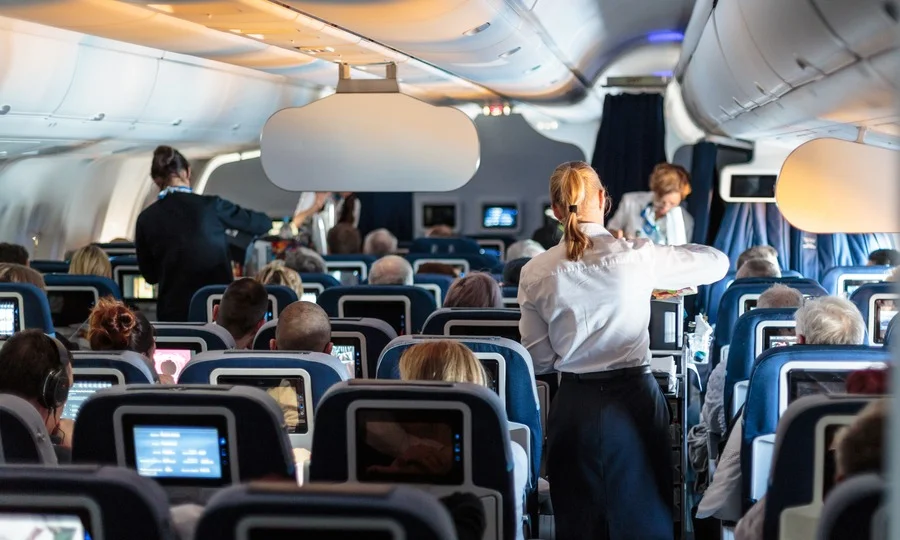
Airlines are increasingly segmenting their cabins, offering a complex array of choices beyond the traditional economy and business classes. This strategic shift, driven by a surge in premium cabin revenue, is reshaping air travel. Delta Air Lines recently revealed a pivotal moment in this trend, with its higher-tier offerings generating more income than its standard main cabin tickets.
Flying used to be straightforward. Cabins typically featured economy and business sections, with some routes adding a first-class option. Business class tickets were historically justified by their exceptional flexibility, allowing last-minute changes without extra fees, rather than just superior comfort.
Today, the landscape looks vastly different, especially among legacy carriers. While low-cost airlines generally opt for uniform seating and service, flag carriers embrace diversification. They now offer numerous ticket and service classes. This ensures passengers willing to pay more can access enhanced comfort levels.
Taiwan’s EVA Air pioneered the concept, introducing “Economy Deluxe Class” in 1992, widely considered the first true premium economy product. It now offers four distinct travel classes. However, Singapore Airlines currently leads in cabin differentiation, boasting five distinct categories from Suites to Economy.
Delta Air Lines highlighted the financial impact of this segmentation. In the final quarter of 2025, its premium cabins generated $5.7 billion. This figure narrowly surpassed the $5.62 billion earned by its main cabin. For the first time in Delta’s history, seats at the front of the plane outsold those at the back. Moreover, premium ticket revenue climbed nine percent over the quarter, while main-cabin revenue decreased by seven percent. Delta CEO Ed Bastian indicated that virtually all of the airline’s planned seat growth in 2026 would be in premium sections, not economy.
The core driver behind this “chop and charge” approach is limited aircraft real estate. A business-class seat occupies the same floor space as three or four economy seats. However, it typically earns the airline significantly more revenue. For instance, on Delta’s New York to Los Angeles route, four economy seats fetch around $616. A single lie-flat Delta One seat in the same space commands a remarkable $1,599.
Unsurprisingly, premium economy, the mid-tier option, has become particularly profitable. Lufthansa states it generates up to a third more revenue per square foot than standard economy, despite seats not being drastically roomier. American Airlines identifies premium economy as the most profitable use of space on its wide-bodied jets. United reports its Premium Plus cabin boosts revenue per seat-mile by four to six percent. These figures strongly underline the value of premium cabin revenue for airlines.
For budget-conscious travelers often relegated to the rear, this evolution raises concerns. Is premium economy merely what economy once was? Measurements suggest this is largely true. The average pitch in long-haul economy cabins has shrunk from approximately 34 inches in the 1980s to just 30-31 inches today. Premium economy, by contrast, averages about 38 inches.
Airlines defend these changes, citing improved entertainment and meal services. They emphasize that such adjustments are crucial for profitability and operational sustainability. Carriers have learned to market comfort effectively to passengers least likely to downgrade during financial constraints. Delta’s Bastian noted last September that over 95 percent of the airline’s revenue comes from households earning $100,000 or more annually. However, industry margins can be surprisingly slim; McKinsey estimates even a thriving transatlantic route yields only about a 12 percent profit.
One simpler, cheaper method to enhance flying comfort exists without creating new classes. Lufthansa’s premium economy seats feature a fixed shell. This design prevents a reclining passenger from encroaching on the space of the person behind them. It highlights an interesting paradox: airlines have solved the recline conflict, but only for those paying extra.
Perhaps a universal solution could involve following low-cost carriers by removing reclining seats from economy entirely. Non-reclining seats are lighter and cheaper to maintain. Moreover, they eliminate passenger friction caused by invading personal space.